

Never Trust the GPS in May: Sunken Trucks and the 50-Millisecond Handshake
The Poconos don’t wake up gently in mid-May. The transition from the harsh winter freeze to the summer booking rush is a violent explosion of damp earth, vibrant green buds, and backroads that turn into thick, impassable soup. The air up here right now smells like pine sap and rain, a heavy, oxygen-rich atmosphere that coats your lungs and your camera lenses.
This is the frontier of the Visual Capital machine. We aren't just taking pictures out here; we are building brand moats in the mud.
My morning started deep in the Locust Lake corridor at a property we’ll call The 550 Box. It’s a quintessential, hyper-compact mountain chalet. When you are dealing with a 550-square-foot footprint, you aren't selling architecture. If you try to document the room, you just highlight the lack of space. You have to sell the seduction of the escape.
I spent the first hour engineering the atmosphere. I digitally flagged the indoor fireplace to be ignited in post-production, rearranged the deck chairs to face the treeline, and framed a tight lifestyle vignette: a steaming coffee mug resting on the railing with the dense, budding spring forest blurred in the background. Nobody books a property for the laundry room. They book it because they want to sit in that chair, holding that mug, breathing this air. That single shot is the hook that bridges the experience gap.
Packing up the gear, I threw my Pelican cases into the back of the truck and charted a course toward the Lake Harmony area for the next target. My GPS, feeling particularly adventurous, routed me off the main pavement and down an old, unmarked logging route near the edge of Hickory Run.
That was mistake number one.
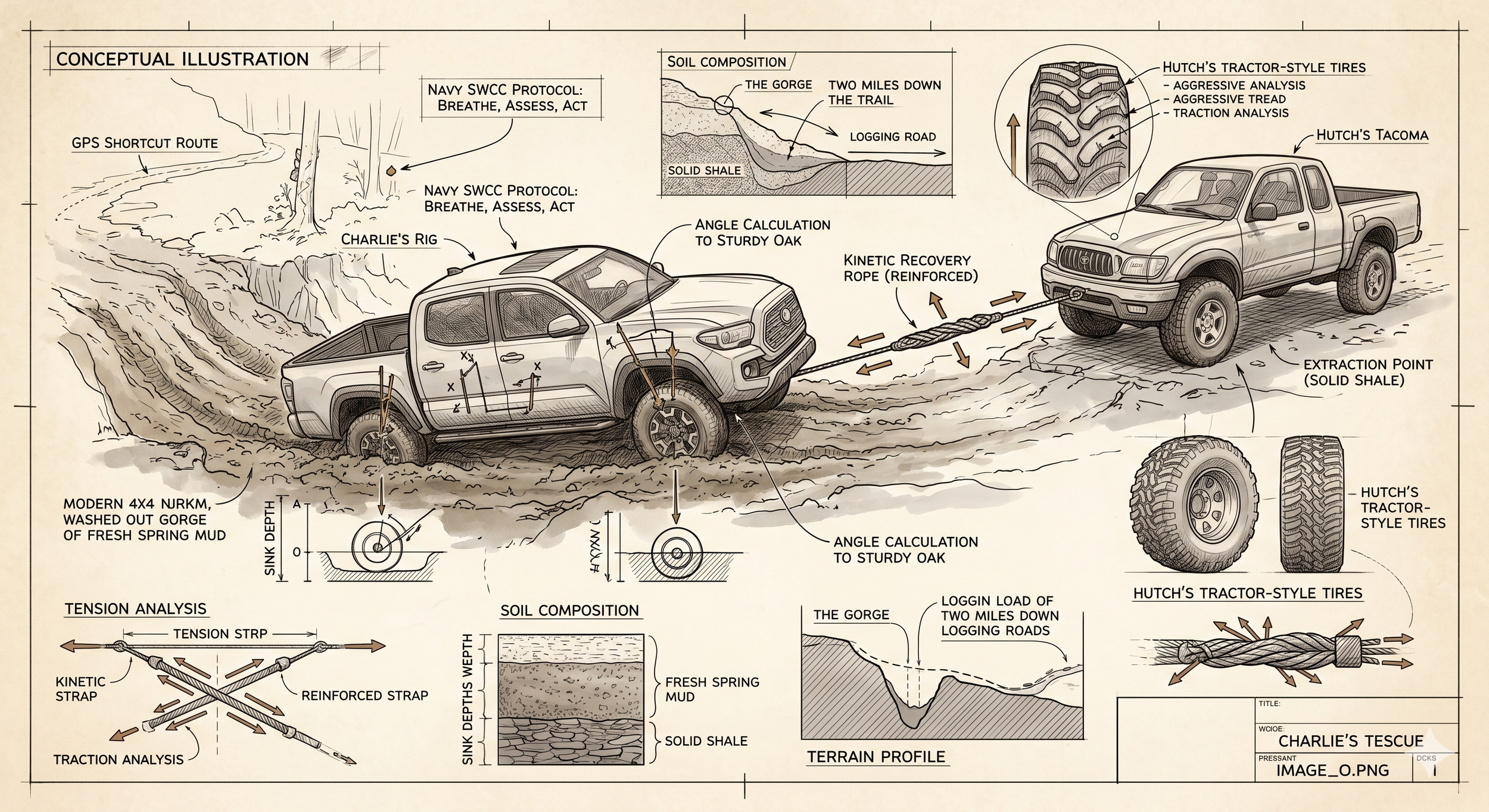
About two miles down the trail, the gravel gave way to a deeply rutted, washed-out gorge of fresh spring mud. I felt the tires spin, catch, and then seamlessly sink straight down to the axles. The truck groaned, burying its belly into the Pennsylvania earth.
Chaos is just an unpaid extra on set. You don't fight it; you direct it. The old Navy SWCC training kicks in automatically in these moments—breathe, assess, act. Panic is a luxury you can't afford when you have a production schedule to keep and failing light to chase.
I climbed out into shin-deep mud, boots instantly soaked, and grabbed the kinetic recovery rope from the bed. Just as I was calculating the angle to the nearest sturdy oak for a winch point, I heard the unmistakable rumble of a diesel engine. A beat-up, late-nineties Tacoma came crawling around the bend, outfitted with tires that looked like they belonged on a tractor.
The driver rolled down his window. He had a gray beard, a faded flannel shirt, and a look of absolute unsurprise.
"GPS tell you this was a shortcut?" he asked, his voice like grinding rocks.
"Something like that," I replied, tossing him the heavy end of the tow strap. "I’m Charlie."
"Hutch," he grunted, hooking the strap to his rear receiver. "You city boys always trust the satellites over the dirt. Hold onto your coffee."
With a roar of diesel and a violent jerk, Hutch’s Tacoma dragged my rig backward out of the trench and onto solid shale. I offered him a twenty for his trouble, but he just waved it off, laughing as he threw the truck into gear. "Just pass it on, brother. And stay off the logging roads in May."
Covered in mud but with the gear secured, I rerouted and finally pulled up to our second target: The Deepwater Deck.
This was a massive, high-leverage lakefront asset. The client already had standard interior shots; my mission was to capture the exterior lifestyle and the sheer scale of the location. The problem? It was 1:30 PM, and the mid-May sun was casting harsh, unforgiving shadows across the water. A daytime hero image here would look flat and uninspired.
But your hero image is your handshake—if it’s weak, the conversation ends. It needs to stop the scroll in fifty milliseconds.
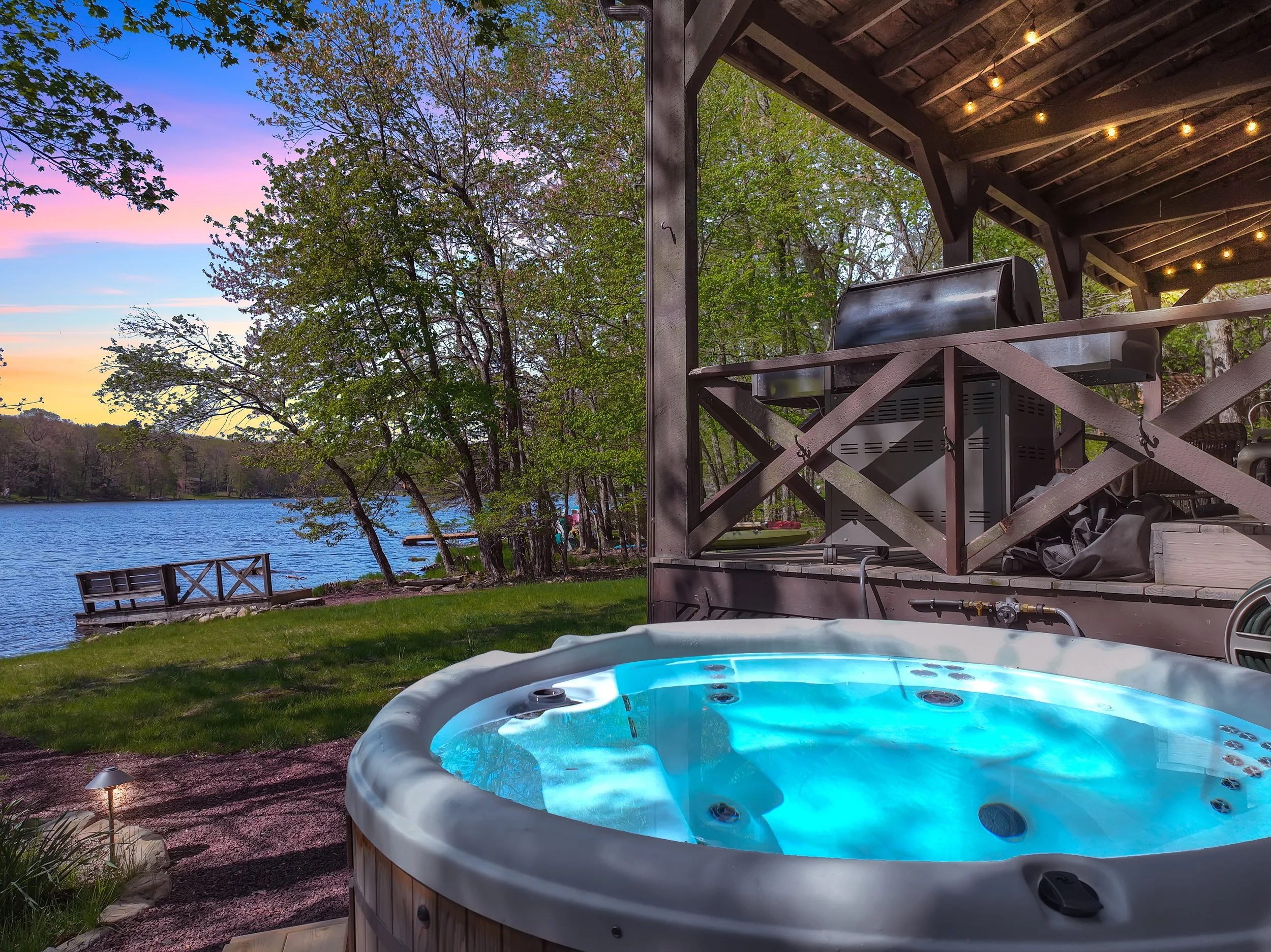
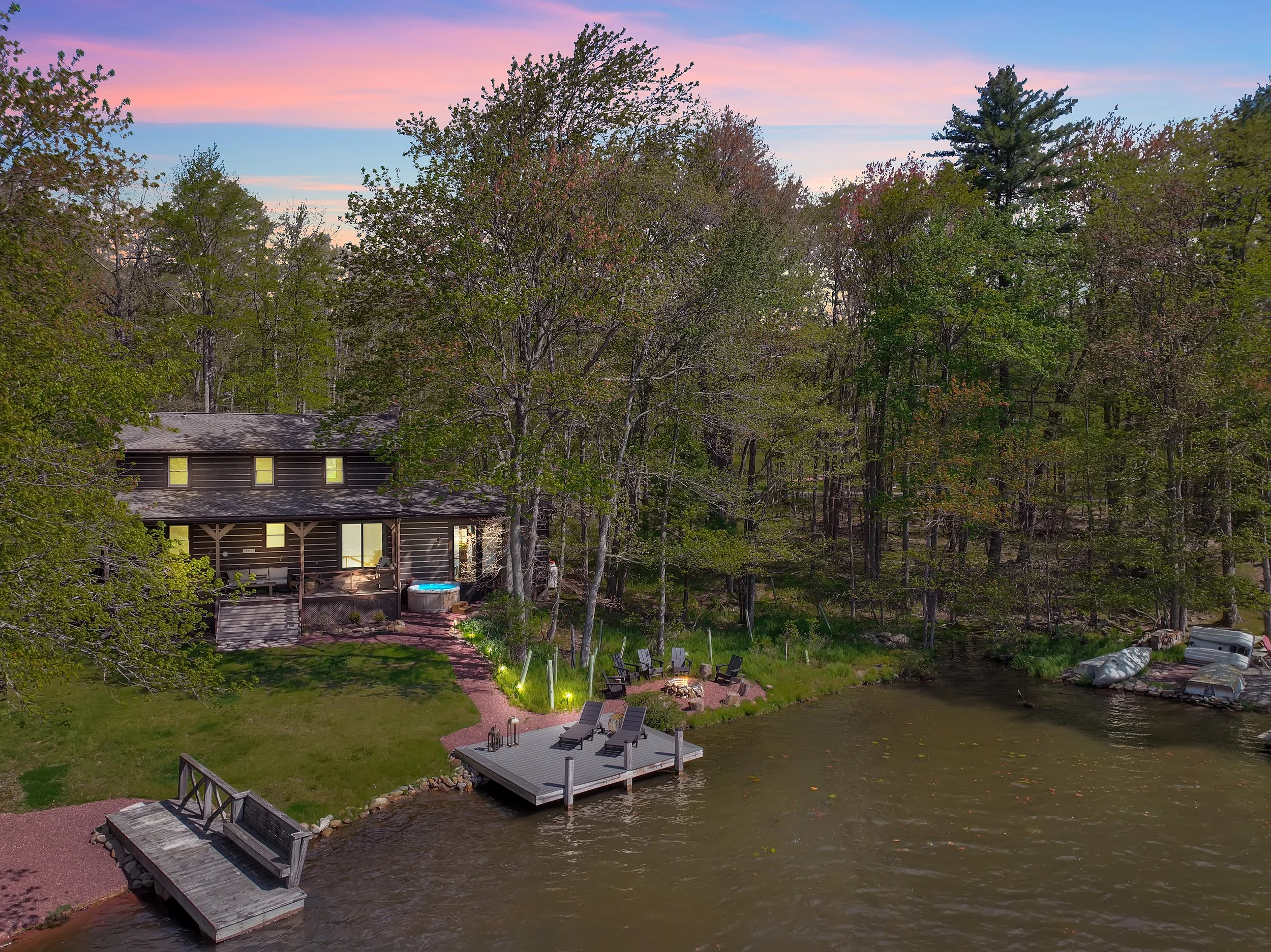
I launched the drone, fighting a stiff crosswind coming off the lake. I framed the hot tub, the lakeside fire pit, and the sprawling deck against the water. I didn't need the perfect light; I needed the perfect geometry. By capturing the raw architectural foundation now, our Hybrid Intelligence Engine—Inhabit EDGE—will handle the rest tonight. We will execute a flawless virtual twilight conversion, swapping the harsh afternoon glare for a deep, cinematic blue hour, illuminating the hot tub and igniting the fire pit. We are bringing our own sunshine and engineering the exact emotional response required to dominate the OTA search rankings.
My final stop was a sprawling, multi-structure estate we designated The Triplex Footprint. It featured two adjacent lots, a main house, two smaller cabins, and a rushing spring stream. The property lines were a mess to the naked eye.
Investors don't buy confusion. I sent the drone up to maximum legal altitude, capturing a high-resolution, top-down orthomosaic of the entire landscape. The trees were just beginning to bud with that bright, neon spring green, providing perfect contrast. In post-production, we will draw clean, professional boundary lines directly onto these aerials. We are taking a chaotic, overgrown landscape and translating it into clean, digestible data.
I packed the drone away just as the late afternoon rain began to fall, washing the worst of the mud off the truck's quarter panels. It was a gritty, brutal, beautiful day in the field. We survived the elements, bypassed the mechanical gremlins, and extracted the raw data. Tonight, the Inhabit Operating System takes over. By tomorrow morning, our clients won't just have photographs; they will have a visual brand moat.
The Adventurist Guide
The Ghost Roads of the Poconos & The Glacial Echoes The backroads of the Pocono Mountains are deceptive. What appears on a modern GPS as a viable shortcut is often a ghost road—a remnant of the region's massive 19th-century lumber and coal extraction industries. Before this area became a haven for luxury short-term rentals and boutique hospitality, it was a rugged frontier of logging camps and rail lines.
When navigating the areas around Lake Harmony and White Haven, especially in the volatile transition of late spring, it is critical to understand the topography. The ground here is heavily influenced by its ancient glacial past. Just a few miles from where my truck sank into the mud lies Boulder Field at Hickory Run State Park—a striking, desolate expanse of rocks left behind by the retreating Wisconsin Glacier over 20,000 years ago. This geologic history means the soil composition can change from solid shale to bottomless, water-logged clay in a matter of feet, especially during the May thaw.
For the modern traveler or photographer, these raw, untamed elements are part of the region's magic. The contrast between the ancient, rugged wilderness and the highly curated, luxurious interiors of the modern STR market is exactly what makes the Poconos such a lucrative hospitality sector. When you visit, respect the terrain, carry kinetic recovery gear, and always be prepared to embrace the chaos of the mountains.
Photo Marketing Tactics
The Visual-to-Value Pipeline in Action The tactical decisions made in the field today were not driven by artistic preference; they were driven by the strict mandates of the Visual-to-Value Pipeline. Every visual asset we capture must serve a specific, revenue-generating purpose for the client.
1. Lifestyle Staging to Close the "Experience Gap" At The 550 Box, the strategic focus was on lifestyle vignettes rather than wide-angle architectural documentation. In the short-term rental market, you are not selling square footage; you are selling an aspirational experience. A tight shot of a coffee mug overlooking a budding spring forest triggers mirror neurons in the viewer's brain. It allows them to subconsciously project themselves into the space. This emotional connection is the primary catalyst for booking conversions, fundamentally shifting the listing from a commodity to a premium destination.
2. The Virtual Twilight & The 50-Millisecond Rule At The Deepwater Deck, we captured daytime aerials with the explicit intent of processing them through Inhabit EDGE for a Virtual Twilight conversion. The data is irrefutable: twilight imagery can increase a listing's click-through rate by up to 60%. In the grid-like interface of Airbnb or Vrbo, a potential guest makes a snap judgment about a property in roughly 50 milliseconds. A warm, glowing evening shot with illuminated amenities stands out aggressively against a sea of standard, flat daytime photos. It is the ultimate digital handshake.
3. Architectural Clarity for High-Ticket Investors At The Triplex Footprint, the use of high-altitude drone mapping to delineate property lines addresses a specific buyer persona: the out-of-town investor. Clarity accelerates sales velocity. By providing visual data that instantly explains complex lot layouts and proximity to natural features (like the stream), we remove friction from the buyer's evaluation process, directly increasing the perceived value and marketability of the asset.